The following texts were partially or completely generated with the help of generative AI models.
SAP skills shortage in projects: How upskilling existing employees can be the solution
In the world of information technology, and especially in SAP projects, a serious problem is currently emerging: a shortage of qualified SAP professionals. Companies and consulting firms feel the pressure, as they struggle to find suitable staff for their projects. In light of this shortage, upskilling existing employees is gaining importance.
Where does the problem lie?
The SAP skills shortage is nothing new. The complex SAP system requires specialized knowledge and thorough training in order to implement effective projects. But in recent years, the demand for such professionals has clearly outstripped their availability. Consulting firms, which are often expected to bridge temporary bottlenecks in projects, face the same challenge. Especially among SAP professionals, demographics are a particular factor. Many employees in this area will reach retirement age in the coming years. And the new generation tends to give SAP technology a wide berth. So we have to assume that the number of employees in this area may even decrease in the medium term.
The problem has at least 2 dimensions
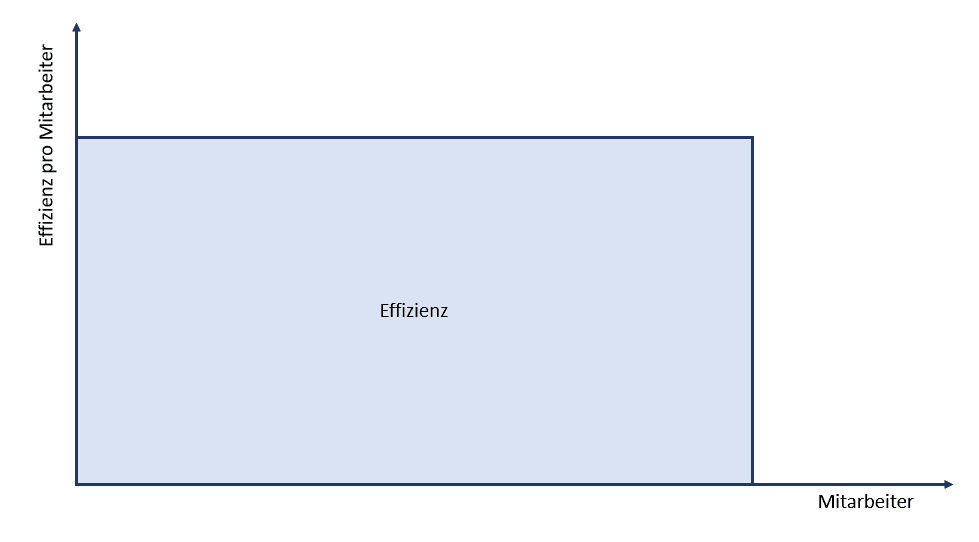
In our image with the tug-of-war, it is obvious that more people pulling can increase the force. But better technique helps just as much. This can be applied directly to an SAP project. More employees naturally help, but they are very hard to find. When I look at the profiles that recruiters are currently sending out, there are no employees among them that you would want to hire.
The other option would be: to make the existing employees more effective.
The solution through upskilling
Just as important as a sufficiently large number of employees is the good qualification of the staff. When a technology change is due, the know-how often comes into the company through new employees or through self-taught learning. Systematic training is frequently lacking. Set-in-their-ways developers often don't really understand the new concepts and argue for sticking with the traditional, proven technologies (SE80 & form routines ;-) ). We have to meet employees where they currently are.
Training existing employees technically and methodically
With good training, the problem-solving competence and efficiency of your own employees increase. The know-how stays in the company long-term. However, training employees is a long road. Especially in development, it is important that colleagues do not just attend a single training session once. You have to meet each participant where they are and take them along on the journey. Long-term support, as well as the opportunity and time to apply the knowledge learned, are important building blocks. In addition to new technologies, such as
- CDS ABAP - The Core Data Services for ABAP are a central core component in the modern S/4HANA system. Nevertheless, most SAP developers have never learned them thoroughly. Instead, it is taught to oneself through learning by doing, hopping from error to error.
- ABAP RAP - SAP's ABAP RESTful Application Programming Model forms the core of new applications on the ABAP technology stack. Whether in the cloud or on premise, this is absolutely essential knowledge that every developer should have.
- AMDP - especially in SAP BW/4HANA an indispensable technology if you want to use the performance of SAP HANA in the backend.
it is also the tools and techniques that go along with them. We summarize these under the keyword developer efficiency. In other words, everything that helps you write code quickly and robustly - and thereby reduce the overall development time. This includes, among other things:
- Clean Code - Clean, long-term valuable and maintainable code
- Unit Tests - Unit tests for all classes and programs. At SAP, this has been standard for years. At customers, I have rarely seen it.
- Modern ABAP - The ABAP language has evolved enormously. The new language elements allow more readable, more compact source code. Among other things, OpenSQL has also evolved into ABAP SQL and allows many operations to be pushed down directly to the SAP HANA database.
- Eclipse ADT - The ABAP Development Tools are a great tool for effective programming. But unfortunately, at most customers they are only used where it can hardly be avoided. For example, for CDS and AMDP. Here, well-founded training with practical tips is essential.
With good training, you learn not only the facts but also the approaches, tips, and tricks. Watching a professional at work often gives you very useful impulses. It is also important that after the training you still have a contact person for the questions that only come up in practice.
Conclusion
The current SAP skills shortage poses a challenge for many companies. But instead of relying exclusively on external recruitment, companies should seize the opportunity and invest in their existing talent. Through targeted training measures, companies can not only combat the shortage but also motivate their existing employees. Training is certainly not the sole solution to the challenge, but it can make a valuable contribution to it.
The training courses from Brandeis Consulting can help you reduce the problems. We place great emphasis on practical demos, exercises, and the topic of developer efficiency. We want to take all participants along, not just the "better half". And after the training, participants can sign up for our free consultation hours for all questions related to development. This means they are well supported even after the training.
Together with Cadaxo from Vienna, we offer open workshops on the relevant topics of modern ABAP development under the brand S/4FIT.